
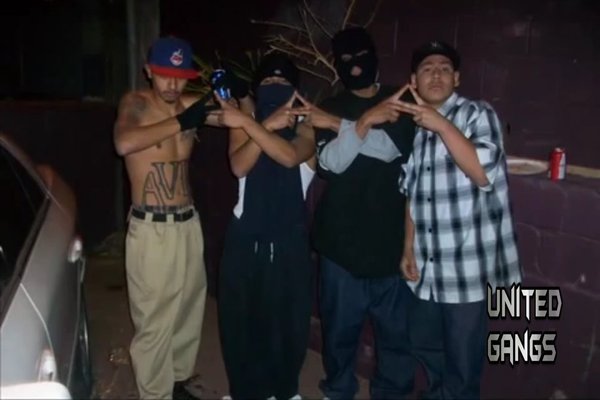
Full Name: The Avenues (AVES)
Also Known As: Los Avenidas, Avenues 13, Avenidas, AVES, AVS
Location: Northeast Los Angeles, California
Communities: Highland Park, Glassell Park, Cypress Park, Eagle Rock
Founded: 1940s
Ethnicity: Mexican-American
Affiliation: Sureños
Prison Affiliation: Mexican Mafia
Symbols: Fedora Skull (“The Avenues Skull”)
Notable Figures: Maria “Chata” Leon, Daniel “Klever” Leon
The Avenues, also known as Los Avenidas, AVES, and Avenues 13, is a long-standing Mexican-American street gang based in Northeast Los Angeles, California. The gang developed around the numbered avenues and streets running through communities including Highland Park, Glassell Park, Cypress Park, and Eagle Rock.
The Avenues began as a neighborhood social club before evolving into one of the most documented street gangs in the region. The gang operates under the Sureño umbrella and uses the number 13, reflecting its association with the Mexican Mafia prison organization.
Foundation and Early History
The Avenues originated in the 1940s as a neighborhood social club among Mexican-American youth in the Highland Park area. Early accounts connect the group’s formation to the Flores brothers, who helped establish a local organization centered around neighborhood ties and protection.
During the 1950s, The Avenues expanded as Northeast Los Angeles underwent major changes. The destruction of Chavez Ravine and redevelopment projects around Rose Hill displaced many working-class families, pushing residents into surrounding neighborhoods and increasing the importance of neighborhood-based groups.
By the late 1960s, The Avenues had developed into a more organized street gang as conflicts between neighborhood groups increased. The introduction of heroin into Northeast Los Angeles during this period contributed to changing street dynamics.
In 1972, the LAPD Northeast Division created the J-Car unit in response to rising gang violence in the area. The unit briefly helped negotiate a truce between The Avenues and 18th Street, although the agreement was short-lived.
During the 1980s and 1990s, The Avenues expanded throughout Highland Park, Glassell Park, Cypress Park, and surrounding communities while developing rivalries with nearby groups.
Territory
The Avenues developed throughout Northeast Los Angeles, including Highland Park, Glassell Park, Cypress Park, and Eagle Rock. The gang’s name comes from the numbered avenues running through the area, reflecting the streets that shaped its early development.
The gang’s traditional territory centered around Figueroa Street, Pasadena Avenue, York Boulevard, Drew Street, and other nearby corridors. These areas became associated with different Avenues cliques over time.
One of the areas most closely associated with The Avenues is Drew Street in Glassell Park. The neighborhood became linked to the gang during its most active years and later became the focus of major investigations.
Structure & Identity
Historically recognized cliques include 43rd Aves, Avenues 57, Cypress Avenues, Division Street, Drew Street, and 54 Avenues, also known as 54 Gangsters.
The Drew Street clique became one of the gang’s most documented sections during the 1990s and 2000s. The area later became the focus of major investigations and law enforcement operations.
The 43rd Aves clique became widely documented after federal prosecutors targeted members for a series of racially motivated attacks in Highland Park during the late 1990s and early 2000s.
The Cypress Avenues is the original clique and shows how neighborhood gang boundaries changed over time. According to gang research and investigative reports, Cypress Avenues is believed to have developed from a split involving Frogtown Rifa, another long-standing Northeast Los Angeles gang.
The Fedora Skull (“The Avenues Skull”)
One of the most recognizable symbols associated with The Avenues is the Fedora Skull, also known as “The Avenues Skull.” The image typically depicts a skull wearing a fedora, often incorporating a bullet hole as part of the design. The symbol has been used in tattoos, artwork, and gang markings connected to The Avenues.
The Fedora Skull became a lasting symbol associated with The Avenues. Along with markings such as AVES, Avenidas, and AV13, the image helped distinguish the group from other street gangs operating throughout Northeast Los Angeles.
Media & Entertainmenment
The Avenues gained wider public recognition through documentary television programs that examined the gang’s history, cliques, and major cases.
In 2009, The Avenues were featured on the History Channel documentary series Gangland in the episode “Highway to Hell.” The program examined the gang’s roots in Highland Park, its neighborhood-based cliques, and the conflicts that brought national attention to the organization.
In 2013, The Avenues were featured again in the documentary series Gangsters: America’s Most Evil in the episode “The Avenues Mom: Maria ‘Chata’ Leon.” The episode focused on Maria “Chata” Leon and the Drew Street clique, highlighting one of the most documented chapters of The Avenues’ history.
Documented Incidents
The Avenues Gang Injunction (2002)
One of the earliest major legal actions targeting The Avenues came in 2002, when the City of Los Angeles approved a civil gang injunction against members of the organization.
The injunction covered portions of Highland Park, Glassell Park, Cypress Park, and surrounding communities, restricting documented gang members from associating with one another in public areas within the designated zone.
The injunction was part of the city’s effort to restrict public activity by documented gang members in Northeast Los Angeles.
The 43rd Aves Federal Hate Crime Case (2006)
One of the most significant cases involving The Avenues occurred in 2006, when members of the 43rd Aves clique were prosecuted in federal court for racially motivated attacks against Black residents in Highland Park.
The investigation focused on attacks during the late 1990s and early 2000s, including the killings of Kenneth Kurry Wilson in 1999 and Christopher Bowser in 2000. Federal prosecutors alleged that members of the clique targeted victims because of their race.
Several defendants, including Lucky Saldana, Shadow Cambero, Bird Martinez, and Sneaky Cazares, were convicted in federal court. The case resulted in multiple life sentences and became one of the most widely documented federal prosecutions involving The Avenues.
The Drew Street Shootout and Deputy Juan Escalante Murder (2008)
In 2008, a series of violent incidents involving the Drew Street clique led to one of the largest law enforcement responses against The Avenues.
On February 21, 2008, members of the Drew Street clique were involved in a drive-by shooting in Cypress Park that killed Marco Salas. Following the shooting, LAPD officers stopped a vehicle connected to the suspects near Drew Street and Estara Avenue.
The confrontation escalated into a gun battle involving gang members and officers. Daniel “Klever” Leon, a 22-year-old Avenues member, was killed during the exchange, while other suspects were arrested.
On August 2, 2008, off-duty Los Angeles County Sheriff’s Deputy Juan Abel Escalante was shot and killed outside his parents’ home. Federal investigators later alleged the killing was retaliation connected to Leon’s death.
The Drew Street Federal Crackdown and Satellite House Demolition (2008–2009)
Following the violence surrounding the Drew Street clique, federal authorities launched a major investigation targeting members and associates of The Avenues.
In June 2008, a federal racketeering indictment targeted dozens of individuals connected to the Drew Street clique. Investigators focused on the clique’s leadership structure and activities centered around the neighborhood.
A major focus of the investigation was the residence at 3304 Drew Street, known as the “Satellite House.” Investigators identified the property as a location associated with the Drew Street clique during the investigation.
The city later used a narcotics-abatement action to seize the property, and the residence was demolished in February 2009.
Alliances & Rivals
The Avenues’ rivalries were shaped by decades of conflict with nearby neighborhood gangs.
One of The Avenues’ most recognized rivalries has been with Frogtown Rifa, based in the nearby Elysian Valley. The two gangs developed in neighboring communities separated by the Los Angeles River corridor, creating a long history of conflict.
The Avenues have also maintained rivalries with Toonerville Rifa of Atwater Village and Thee Rascals, two other Northeast Los Angeles gangs located near the gang’s traditional territory.
Other historic rivals include Cypress Park groups, Highland Park 13, and 18th Street. These conflicts developed through territorial disputes, neighborhood boundaries, and longstanding tensions between street gangs operating throughout the area.
The close distance between these communities helped create rivalries that continued across generations.
BIG LXHTS TRECE GANGRIFA ESE WACKinK OUT ALL you PINCHE NEGRITOS I HATE AVENDIAS I KILLED 30 OF THEM IN DA PINTA SERIO MY NAME IS LIL QUETE FROM LXHTS PUTTING IT DOWN FOR THE TRECE eNe//:. PURO SUR RIFA…
Stfu loser
Fuck all of you mindless clones. Do what the Big Homie says or suffer the consequences!!! LMAO.