Name: Varrio Echo Park Locos
Also known as: Echo Park 13, EPL, EXP, EP, EPLS, XIII
Founded: Late 1950s or early 1960s
Founded in: Echo Park, Los Angeles, California
Territory: Echo Park, Los Angeles
Ethnicity: Predominantly Mexican-American
Affiliation: Sureños
Prison Affiliation: Mexican Mafia
Rivals: Diamond Street, Big Top Locos, Frogtown Rifa, Head Hunters, The Crazys
Echo Park Locos (EPL), also known as Echo Park 13, is a predominantly Mexican-American street gang based in the Echo Park neighborhood northwest of Downtown Los Angeles. The gang identifies with the Sureños and the number 13. Common identifiers include EPL, EXP, EP, EPLS, Echo Park 13, and XIII.
Foundation And Early History
Echo Park Locos emerged during the late 1950s or early 1960s in the Echo Park neighborhood northwest of Downtown Los Angeles. Although an exact founding date has not been documented, the gang formed during the postwar expansion of Hispanic street gangs in Central Los Angeles.
As Echo Park’s Mexican-American population expanded during the mid-twentieth century, the gang became one of several established barrios in the neighborhood. By the 1970s and 1980s, it had become firmly established while sharing portions of Echo Park with Diamond Street Locos, Big Top Locos, Frogtown Rifa, The Crazys, and Head Hunters.
During the late 2000s, internal conflict within the gang became the focus of public attention. The 2009 murders of veteran member Eric Zamarripa and Carlos Gonzalez became one of Echo Park’s most widely reported gang investigations.
During the late 2000s and early 2010s, the gang became the subject of several homicide investigations, attempted murder prosecutions and civil enforcement actions. In 2013, Echo Park Locos became one of six organizations named in the Echo Park Gang Injunction, which established a 3.8-square-mile safety zone covering Echo Park and surrounding neighborhoods.
Territory
Echo Park Locos claims portions of the Echo Park neighborhood northwest of Downtown Los Angeles. The gang’s historic territory centers around Echo Park Lake and extends through nearby residential streets surrounding Echo Park Avenue, Baxter Street, Innes Avenue, Alvarado Street, Temple Street and Bellevue Avenue.
The gang shares portions of Echo Park with neighboring gangs, including Diamond Street Locos, Big Top Locos, Frogtown Rifa, The Crazys and Head Hunters. The overlapping territories have contributed to longstanding rivalries throughout the neighborhood.
In 2013, Los Angeles County Superior Court approved a permanent gang injunction covering approximately 3.8 square miles surrounding Echo Park Lake, Dodger Stadium and adjoining neighborhoods. The injunction covered six gangs operating in the area and did not define the territory of Echo Park Locos.
Structure & Identity
Investigators identified Charles Arellano as Echo Park’s shot caller in 2010. Prosecutors alleged that Arellano directed members during the ongoing conflict with Los Crazy Mexicans (LCM), assigning participants for retaliatory shootings and other gang operations.
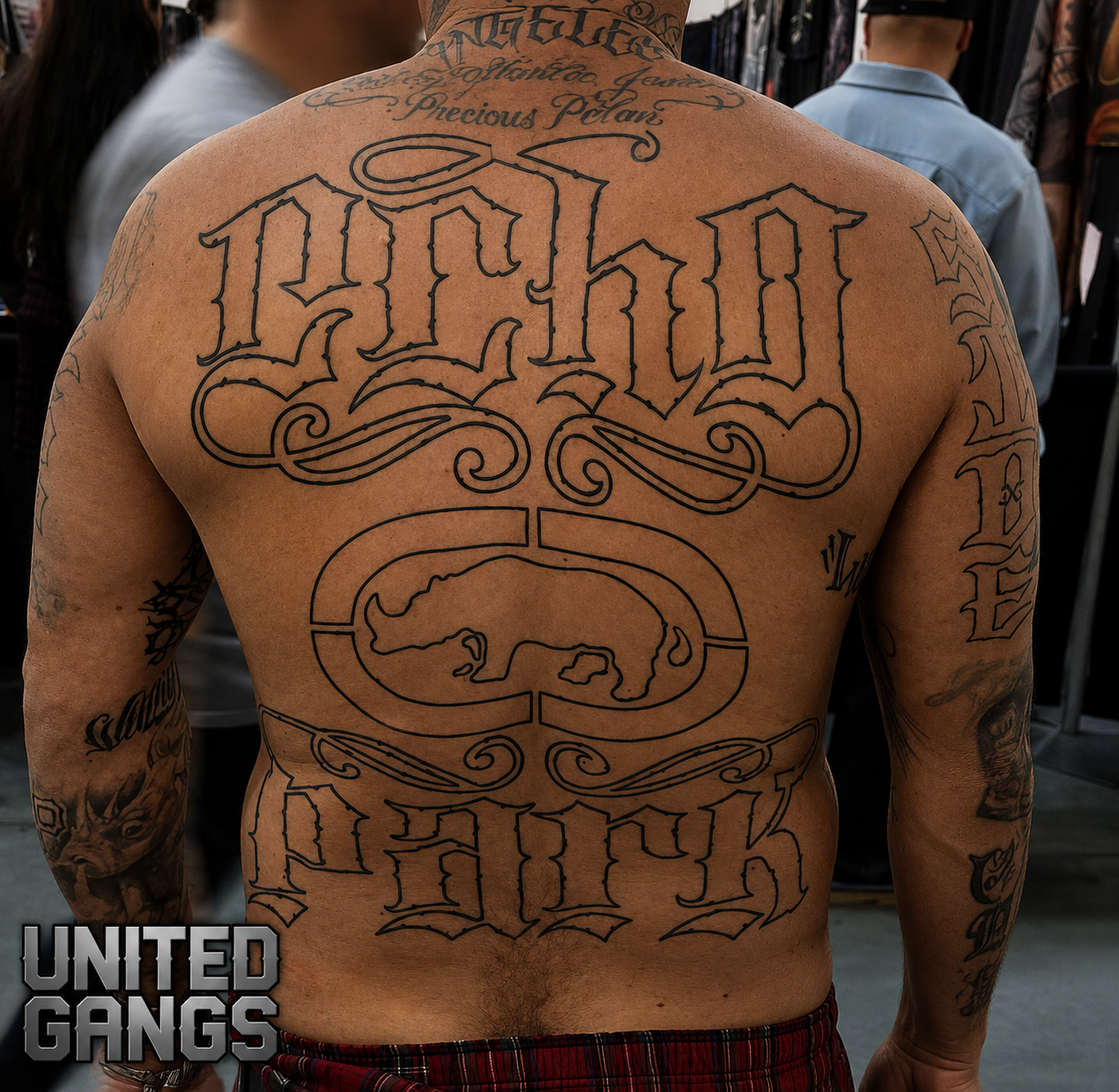
Members commonly identify the gang through the abbreviations EPL, EXP, EP, and EPLS, frequently accompanied by the number 13 or the Roman numeral XIII. Court records also documented the gang’s use of the Marc Ecko rhinoceros logo because of its similarity to the gang’s abbreviation. Graffiti bearing these identifiers has appeared throughout Echo Park during territorial disputes with rival gangs.
In Popular Culture
Echo Park Locos and the surrounding gang culture of the Echo Park neighborhood served as the primary inspiration for the 1993 crime drama Mi Vida Loca (“My Crazy Life”), directed by Allison Anders. The film centers on a fictionalized group of young Chicana gang members known as the Echo Park Locas while depicting the broader gang environment in which they lived.
Filmed on location in Echo Park, Anders consulted with neighborhood gang members during production to help ensure the dialogue, settings, and portrayal of community life reflected the area during the early 1990s. Several local residents and gang members also appeared in the film as actors or extras, contributing to its authenticity.
Although fictional, Mi Vida Loca remains one of the best-known portrayals of gang life in Echo Park.
Documented Incidents
2009 Internal Gang Murders
On March 1, 2009, an internal dispute within Echo Park Locos erupted into a series of shootings that left two people dead and another wounded. Police alleged that Andrew (Andre) Upshaw first shot and wounded William Vargas on Echo Park Avenue before driving to Baxter Street, where he fatally shot veteran gang member Eric Zamarripa outside his residence. About twenty minutes later, Upshaw allegedly killed Carlos Gonzalez in neighboring Glassell Park.
Investigators stated that all of the victims and the suspect knew one another and belonged to Echo Park Locos, describing the shootings as an internal gang dispute rather than a conflict between rival gangs. Upshaw was arrested the following day while attending a hearing in a downtown Los Angeles courtroom on an unrelated felony drug charge. He was later convicted of two counts of first-degree murder, attempted murder, and shooting from a motor vehicle, and was sentenced to life imprisonment without the possibility of parole.
2010 Christmas Day Shootout
On December 25, 2010, Echo Park Locos members carried out a retaliatory attack on an apartment building occupied by rival Los Crazy Mexicans (LCM) members on Innes Avenue. The shooting followed months of escalating violence, including the attempted murder of Charles Arellano and the fatal shooting of his stepson, Ramon Valenzuela.
During the exchange of gunfire, Echo Park member Cesar Guerrero was fatally shot while fleeing the scene. Prosecutors charged Joseph Mancilla and Carlos Rojas with Guerrero’s murder under California’s provocative act murder doctrine. Both men were later convicted of murder, conspiracy to commit murder, and multiple counts of attempted murder.
2013 Echo Park Gang Injunction
On September 26, 2013, Los Angeles County Superior Court approved a permanent gang injunction targeting Echo Park Locos, Diamond Street Locos, Big Top Locos, The Crazys, Frogtown Rifa and Head Hunters. The injunction established a 3.8-square-mile safety zone surrounding Echo Park Lake, Dodger Stadium and adjacent neighborhoods.
The civil order prohibited documented gang members from associating with one another in public, possessing firearms or narcotics, carrying graffiti tools and engaging in other specified activities within the designated safety zone.
Allies & Rivals
Echo Park Locos has historically maintained rivalries with several neighboring Sureño gangs operating throughout Central and Northeast Los Angeles. Its primary rivals include Diamond Street Locos, Big Top Locos, Frogtown Rifa, The Crazys, Head Hunters, and Los Crazy Mexicans (LCM). Most of these rivalries stemmed from overlapping territorial claims within Echo Park and produced decades of retaliatory shootings, assaults, and graffiti vandalism.